Child Pornography Prevention Act of 1996
The Child Pornography Prevention Act of 1996 (CPPA) was a United States federal law to restrict child pornography on the internet, including virtual child pornography.
Before 1996, Congress defined child pornography with reference to the Ferber standard. In New York v. Ferber, 458 U.S. 747 (1982), the Supreme Court held that the government could restrict the distribution of child pornography to protect children from the child sexual abuse harm inherent in making it
The Child Pornography Prevention Act added two categories of speech to the definition of child pornography. The first prohibited “any visual depiction, including any photograph, film, video, picture, or computer or computer-generated image or picture” that “is, or appears to be, of a minor engaging in sexually explicit conduct.”
In Ashcroft case, the Court observed that this provision “captures a range of depictions, sometimes called ‘virtual child pornography,’ which include computer-generated images, as well as images produced by more traditional means.”
The second prohibited “any sexually explicit image that was advertised, promoted, presented, described, or distributed in such a manner that conveys the impression it depicts a minor engaging in sexually explicit conduct.”
Protection Act of 2003
This article is part of a series on the Sex offender registries in the United States

The PROTECT Act of 2003 (enacted April 30, 2003) is a United States law with the stated intent of preventing child abuse as well as investigating and prosecuting violent crimes against children. “PROTECT” is a contrived acronym which stands for “Prosecutorial Remedies and Other Tools to end the Exploitation of Children Today”.
The PROTECT Act incorporates the Truth in Domain Names Act (TDNA) of 2003 (originally two separate Bills, submitted by Senator Orrin Hatch and Congressman Mike Pence)
Legality of Child Pornography
The legality of child pornography is explicitly addressed in 94 of the 187 Interpol member states as of 2008, according to research performed by the International Centre for Missing & Exploited Children (ICMEC) Koons Family Institute on International Law and Policy. Of those 94 countries, 58 criminalized possession of child pornography regardless of intent to distribute.
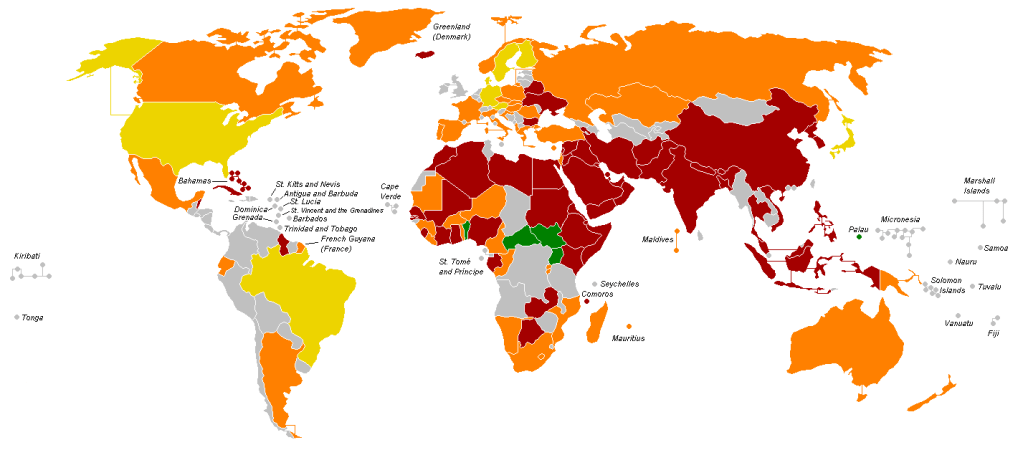


Child pornography is illegal in most jurisdictions of the world. Convictions for possessing child pornography also usually include prison sentences, but those sentences are often converted to probation for first-time offenders.
Some nations such as Canada and Australia have laws banning cartoon, anime, manga or written child pornography and others require ISPs (Internet service providers) to monitor internet traffic to detect it.
Philippines
- Main article: Child pornography in the Philippines
The Philippines passed Republic Act No. 9775 “Anti Child Pornography Act” in November 2009. The Act outlaws the production, creation, distribution and possession of child pornography. It also places obligations on mall operators and owners of commercial property to ensure that violations of child pornography are not being committed on their premises.
Controversially, the Act also creates obligations on internet-related service providers to ensure child pornography is not being stored or transmitted through their services. The Act requires internet service providers and internet hosting services to employ filtering software and to report child pornography violations within 7 days of discovery.
The law also expressly places obligations upon photo developers, information technology professionals, credit card companies, banks and anyone with direct knowledge of child pornography activities to report suspected child pornography materials and transaction within 7 days of discovery.
Prior to the Anti-Child Pornography Act, it was already illegal to use children for pornography and to sell and distribute that material.
Under section 9 of Republic Act No. 7610 “Special Protection of Children Against Child Abuse, Exploitation and Discrimination Act”, its prohibited to hire, employ, use, persuade, induce or coerce a child into performing for obscene publications or pornographic materials.
In addition, the Anti-Trafficking in Persons Act (Republic Act no. 9208) also outlaws the trafficking of children for the use in pornographic material.
Child pornography in the Philippines
Child pornography in the Philippines and the growing commercial sexual exploitation of children in the Philippines have resulted in moves to combat this. In 2016, UNICEF declared that the Philippines is one of the top sources of child pornography.
Convention on the Rights of the Child
In 2003, the Philippines ratified their signing of the United Nations Optional Protocol to the Convention on the Rights of the Child on the Sale of Children, Child Prostitution and Child Pornography; the protocol requires its signatories to recognize child pornography as a crime against children and to treat any act that contributes to production or distribution of child pornography as a criminal offense, within two years of ratification. Although fully compliant comprehensive legislation has not yet been enacted, Philippine law criminalizes the use of children in any aspect of the production or distribution of pornography, defining a “child” as younger than 18 years; and with maximum penalties required if the child involved is younger than 12 years old.
Anti-Child Pornography Alliance
On September 15, 2007, the Children and Youth Secretariat of the Anti-Child Pornography Alliance (ACPA-Pilipinas) in the Philippines launched Batingaw Network “to protect and save children from all forms of abuses and exploitations.” It is the largest anti-child pornography movement in the Philippines to date. It declared September 28 as the National Day of Awareness and Unity against Child Pornography.
 CHILD PORNOGRAPHY